


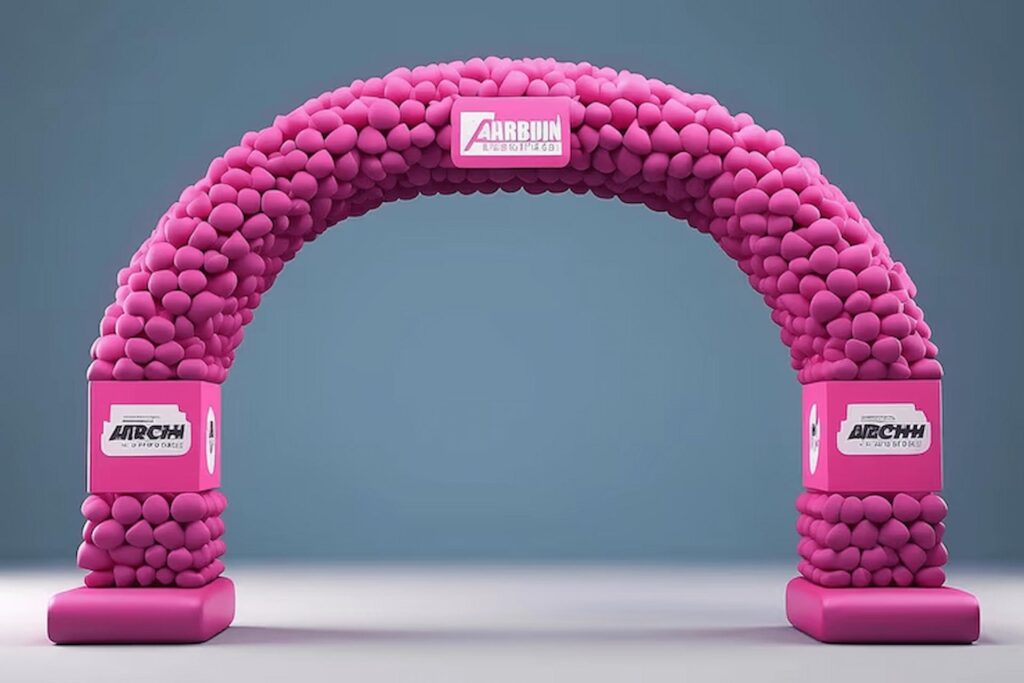
The mass participation sporting event is a marvel of modern logistics. Across the United Kingdom, thousands of runners, cyclists, and spectators gather every weekend to partake in a shared test of human endurance. Organising these massive occasions requires a blend of precise timing, crowd control, and visual communication. Amid the sea of running shoes, high-visibility jackets, and barrier tape, one specific fixture stands out as a universal beacon of progress and achievement. It is a structure that instantly signals the scale of the occasion, commanding attention from a distance while anchoring the entire visual identity of the competition.
For event directors looking to create an impactful environment, investing in high-quality inflatable arches has transitioned from a creative design choice to an absolute logistical necessity. These imposing structures do far more than simply look impressive against the morning sky. They serve as critical infrastructure, dividing the chaotic energy of the gathering into clear, manageable zones. From the local charity five-kilometre run to the prestigious London Marathon, these structures have established themselves as the definitive landmarks of the modern sporting landscape, altering how races are managed, broadcast, and remembered.
The Psychological Power of the Portal
Psychologically, athletes thrive on milestones. A race is not merely a distance; it is a series of emotional phases, beginning with anticipation, moving through physical struggle, and culminating in relief. Large portals play a vital role in framing this journey. When a runner arrives at the registration area, seeing the starting line framed by a massive structure builds excitement and focus. It transforms an ordinary stretch of tarmac into an official arena of competition.
At the other end of the course, the structure becomes an even more powerful tool. For an exhausted marathon runner, turning the final corner and catching sight of the finishing gateway provides a measurable surge of dopamine. It acts as a visual finish line that can be seen from hundreds of metres away, helping athletes find the energy for a final sprint. This clear focal point is equally important for spectators, who naturally cluster around these landmarks to cheer on friends and family, creating a concentrated zone of high energy and emotional celebration.
Operational Efficiency and Rapid Deployment
The logistical charm of using inflatable arches lies in their incredible versatility and ease of setup compared to traditional steel or aluminium scaffolding truss systems. In the past, creating a grand entrance or exit required a team of labourers, a flatbed lorry, and hours of heavy lifting. This created significant safety risks, increased transport costs, and often required extended road closures, which angered local councils.
Modern pneumatic structures have completely changed this dynamic. A single event marshall can transport a deflated structure in the boot of a standard estate car, unpack it at the desired location, and have it fully erected in under ten minutes using an electric blower. This speed is incredibly valuable for multi-site events or races that utilise public highways where strict time limits apply to road closures.
Core Logistical Advantages
The operational benefits extend far beyond the initial setup window, influencing the entire lifecycle of event management:
- Minimal Storage Requirements: When deflated, a structure that stands five metres tall can fold down into a compact storage bag, saving valuable warehouse space during the off-season.
- Excellent All-Weather Durability: Built from thick, weather-resistant PVC or Oxford nylon, they are built to withstand the unpredictable British weather, including heavy rain and moderate winds.
- Enhanced Participant Safety: Unlike rigid metal structures, a soft, air-filled barrier poses a much lower risk of injury if a cyclist or runner accidentally collides with it during a crowded sprint finish.
- Flexible Power Options: They can operate using continuous-flow electric blowers powered by small portable generators, or they can be completely sealed units that require inflating only once.
Maximising Sponsorship Revenue and Brand Visibility
No sporting event can survive without financial backing, and sponsors demand prominent, clear visibility in return for their investment. The geometry of a massive overhead curved structure provides the perfect canvas for high-impact branding. Because these structures straddle the exact path of the participants, they are guaranteed to appear in almost every official photograph and video broadcast.
When a news outlet covers a race, or when a participant shares their medal photograph on social media, the branding on the main gateway is front and centre. This creates a highly valuable marketing return that event organisers can sell to corporate partners at a premium, directly funding the operational costs of the race.
Key Branding and Customisation Features
Event planners can easily adapt these structures to suit different commercial partners and themes year after year:
- Interchangeable Velcro Banners: Instead of printing directly onto the structure, organisers can use removable banners, allowing them to update sponsor logos for different races without buying a new arch.
- Custom Geometric Shapes: Designs are no longer limited to basic semi-circles; manufacturers can create square, polygonal, or bespoke shapes that mimic product packaging or corporate mascops.
- Integrated Lighting Systems: Internal LED lighting can be fitted for night runs, dawn starts, or winter evening events, ensuring the branding remains highly visible in low-light conditions.
- Vibrant Colour Matching: Advanced digital printing allows for exact corporate colour matching, ensuring that global brands maintain their precise visual identity across all platforms.
The Intersection of Technology and Infrastructure
As sporting events have embraced digital tracking, the structural framework of the race has had to adapt. Modern marathons utilise radio-frequency identification chips attached to runner race numbers to track exact split times. These systems require sensors to be placed precisely at the start, mid-way points, and the finish line.
Air-filled structures provide an excellent housing solution for this equipment. The hollow legs and overhead crossbeams can easily conceal the cables, wires, and transponder mats needed for timing systems. By integration, the technology is protected from both torrential rain and foot traffic, preventing technical glitches that could ruin the data accuracy of the entire competition. This seamless merging of visual grandeur and digital utility is precisely why these structures remain an irreplaceable asset for race directors nationwide.
The Ultimate Finish
Air-filled structures have revolutionised sports event management across Britain. By combining swift setup, participant safety, and immense visual impact, they solve complex logistical challenges while generating essential sponsorship revenue. These grand gateways do more than partition space; they dignify the athletic journey, transforming ordinary roads into unforgettable arenas of human achievement. For organisers and competitors alike, these structures represent the definitive boundary where hard training meets triumphant accomplishment, ensuring their place at the heart of sporting culture for years to come.